XIX
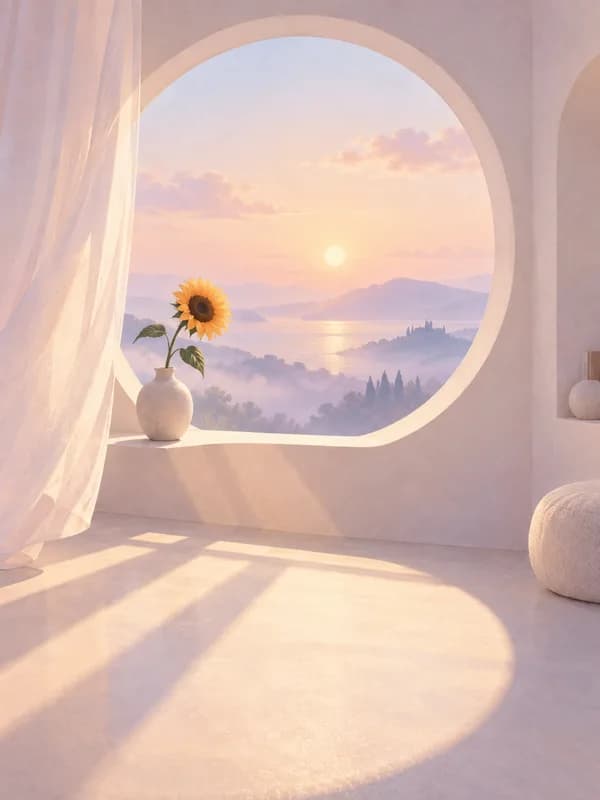 confidence
The Sun
Lounge
Soft paper, pastel colours and a touch of moonlight.
Siebenweg
Siebenweg, roughly “the Seven Paths”, is the name we gave the card system behind every reading here. The card meanings themselves are older than the app, and they aren’t ours.
This is where they come from, as far as we can say, and how the three layers of the system fit together.
The meanings behind our 78 cards come from a man who works shamanically. He developed them over many years of practice. No editorial team came up with them, and certainly no AI.
We don’t print his name. He prefers to stay in the background, and we respect that. So we won’t tell you more about him, and we won’t make anything up either.
What we do have is his system, and it says a lot about the way he sees things. Every card has two sides, a light one and a shadow one, each described in its own words. No card is pure luck, and no card is something to be scared of. Death also stands for new beginnings and letting go. The Sun, on the other hand, can tip into arrogance.
Which side applies isn’t down to the card alone. It depends on the question you bring and the place the card lands. It’s a way of reading that trusts you with something.
You could picture someone who has sat with people and cards for a long time and noticed that the same card opens up something different in everyone. At some point you write down what keeps showing up. That’s how we imagine it. How it really went, only he knows.
Plenty of tarot apps use the meanings you can find anywhere, or let an AI riff freely. Here the AI gets exactly one foundation, his terms. It isn’t allowed to invent other card meanings.
You’ll notice it where Siebenweg sounds different from the usual guidebooks. In its light, the Moon here stands for vocation, clarity and premonitions. When your reading says so, that comes from his system, not from some random blog post.
The three layers
Every card has a light pole and a shadow pole, both in fixed terms. There are no reversed cards. Your question, the position and the neighbouring cards show which pole leads. Often both are there, and then the reading names the tension.
Here’s what that looks like for the Moon.
 vocation
Light pole
vocation · insight · clarity · premonitions · social advancement
Shadow pole
fears · insecurity · setbacks · darkness · downward spiral
Each of the 22 major arcana carries a Hebrew letter, and every letter has a number value. Aleph, the Fool’s letter, counts 1. Qoph, the Moon’s letter, counts 100. The minor arcana follow the same pattern. Ace to ten count 1 to 10, the court cards 20, 30, 40 and 50.
For your key card, the values of every card you drew are added up. If the total is more than 22, the digits are added together, again and again, until it isn’t. The major arcana with that number is your key card. 22 belongs to the Fool.
 leadership
ג
Gimel · Value 3
vocationק
Qoph · Value 100
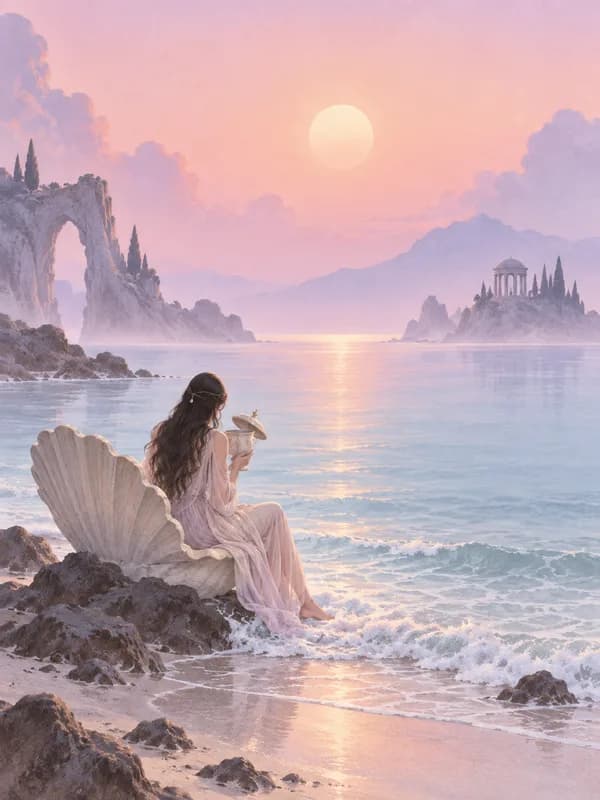 beauty
·
Value 40
3 + 100 + 40 = 143 → 1 + 4 + 3 = 8 → Strength
Every card belongs to one of the seven chakras, from root to crown. In the minor arcana it rises with rank, from the twos in the root to the ace in the crown.
In every spread, we count which chakra turns up most. That’s your chakra focus, and it shows where the question sits in you. There are no healing promises attached. It’s a pointer to a place you might want to tune into.
Root chakra
The root chakra is your ground: home, money, the everyday, feeling steady on your feet. When it shows up, the card asks what you can actually lean on right now.
Sacral chakra
The sacral chakra holds desire, closeness and everything that wants to flow. It’s about what makes you feel alive, and where things have gone still.
Solar plexus chakra
The solar plexus is your drive and your self-worth. It asks what you trust yourself to do, and where you make yourself small.
Heart chakra
The heart chakra is connection and compassion, including for yourself. It shows who and what you’re opening up to.
Throat chakra
The throat chakra is your voice. It’s about what wants to be said, and what you keep swallowing.
Third eye chakra
The third eye is your inner sight, your intuition. It shows what you already sense, even if you haven’t said it out loud.
Crown chakra
The crown chakra is meaning and wide horizons. It asks about the bigger picture behind your question.
You can choose between 5 decks. The classic one shows Pamela Colman Smith’s artwork, first published in 1909. It’s in the public domain, which is why we can show it to you.
The other decks are original illustrations, made for Tarot Lounge. The meanings stay the same in every deck. The artwork changes the mood, and Siebenweg stays put.
confidenceSoft paper, pastel colours and a touch of moonlight.
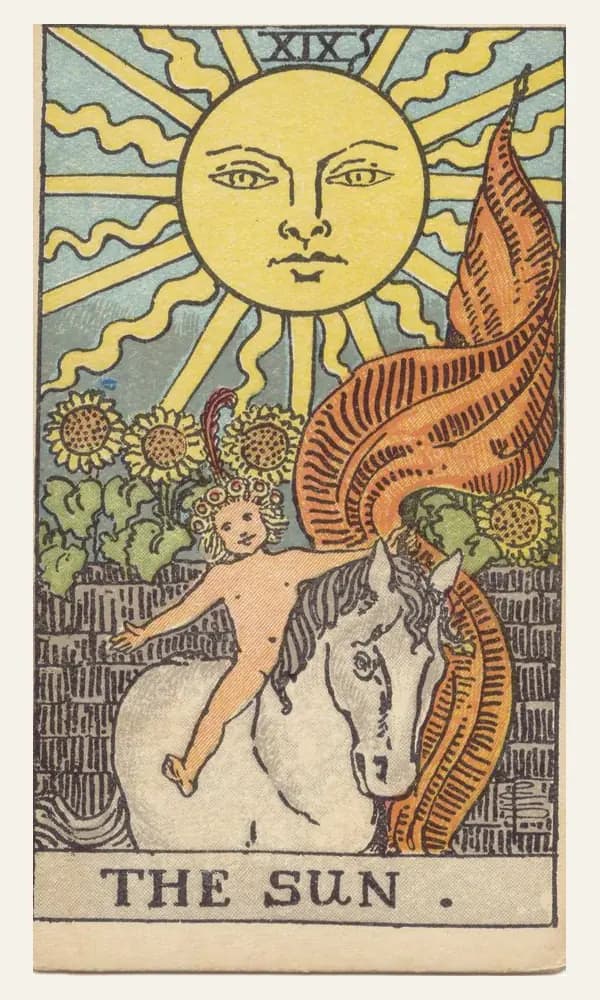
Pamela Colman Smith’s original artwork.
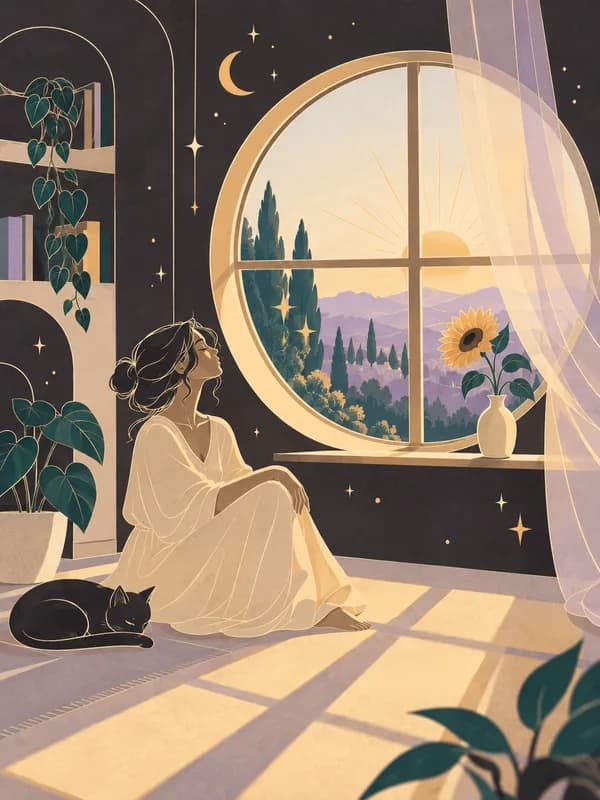
Fine lines on charcoal, touched with gold, lilac and teal.
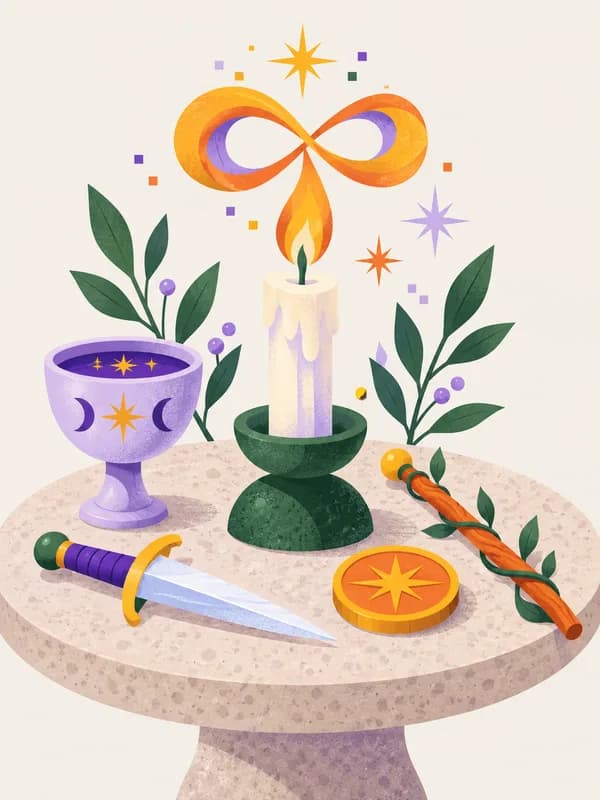
Clean shapes, bright colour fields, a little fun.

Wide landscapes, like vintage travel posters.
Even the card of the day shows you Siebenweg at work: both poles, your key card and a chakra.
Pull your free daily card